

Flying is incredibly safe, but that doesn’t mean you can just switch off once you take your seat. Safety on board isn’t just about aircraft design and the skill of the people up front—it's also about what you do as a passenger. Most of the time, flights are totally uneventful. Maybe that's why it's so easy to ignore a few basic safety habits.
Solid airplane safety isn’t about memorizing emergency cards or obsessing over “what if” scenarios. It’s more about knowing your surroundings and keeping your basics covered. Where’s your closest exit? Is your seat belt clicked in? Is your backpack shoved all the way under the seat? These little things matter when every second counts. That's what this blog is about—practical tips and simple habits that can make a real difference for U.S. travelers.
Passengers are surrounded by airplane safety features, yet many barely notice them. The safety card, seat belt, oxygen mask, emergency exits, life vest where applicable, floor lighting, and evacuation slides are designed for specific situations. You do not need to study every technical detail, but you should know what is available.
The smartest approach is simple: look around before the aircraft leaves the gate. Cabin layouts differ between aircraft, even within the same airline.
One of the most useful airplane safety tips is counting the rows between your seat and the nearest usable exit. There may be an exit behind you, not just ahead. During smoke, darkness, or confusion, counting rows can help you move toward an exit without relying entirely on visibility.
Seat belts are basic airplane safety features, but they are important beyond takeoff and landing. Unexpected turbulence can happen without much warning. Keep the belt fastened whenever you are seated, even if the captain has turned off the illuminated sign.
Don't Miss: Red Eye Flight Tips for a Better Overnight Journey
Airline safety depends on coordinated action. Flight attendants are trained for emergencies, and their instructions are based on the situation happening inside the cabin. Passengers should listen carefully rather than assuming they already know what to do.
During normal operations too, crew instructions help maintain order. If a flight attendant asks you to stow an item, change seats, or remain seated, follow the request. Airline safety is a shared responsibility.
The briefing covers key airplane safety instructions, including seat belts, exits, oxygen equipment, and emergency procedures. Even frequent flyers should pay attention because aircraft configurations and equipment can differ.
The safety card is worth a quick look too. It shows details specific to your aircraft.
Bags, jackets, electronics, or other loose objects should not block escape paths. In an emergency, a misplaced item can slow movement when people are already stressed.
Follow crew instructions about storage carefully. Proper stowing is a small part of aircraft safety, but it has a practical purpose.
Turbulence is uncomfortable. It can also cause injuries when passengers are unrestrained. Modern aircraft are designed to handle turbulence, but passengers can still be thrown upward or sideways during sudden movement.
That makes one of the most useful airplane safety tips surprisingly boring: stay buckled.
A car bump usually stays close to the road. Turbulence does not work that way. Sudden changes in altitude or aircraft movement can happen quickly, which is why aircraft safety guidance emphasizes seat-belt use.
Avoid walking around unnecessarily when conditions are rough. If the crew asks everyone to sit down, do it immediately.
A turbulence event can turn a coffee cup, laptop, or loose phone into a moving object. Keep personal belongings secure when conditions become unstable.
This is also why tray tables and seat-back storage should be used properly. Small precautions reduce avoidable injuries.
Suggested Reading: How to Book Fast Track Airport Security Without the Stress
Emergency actions are not improvised. Airlines train crews around specific flight safety procedures, while aircraft are equipped for different emergency scenarios. Travelers should not create their own process when crew instructions are available.
Instead, listen, watch, then act.
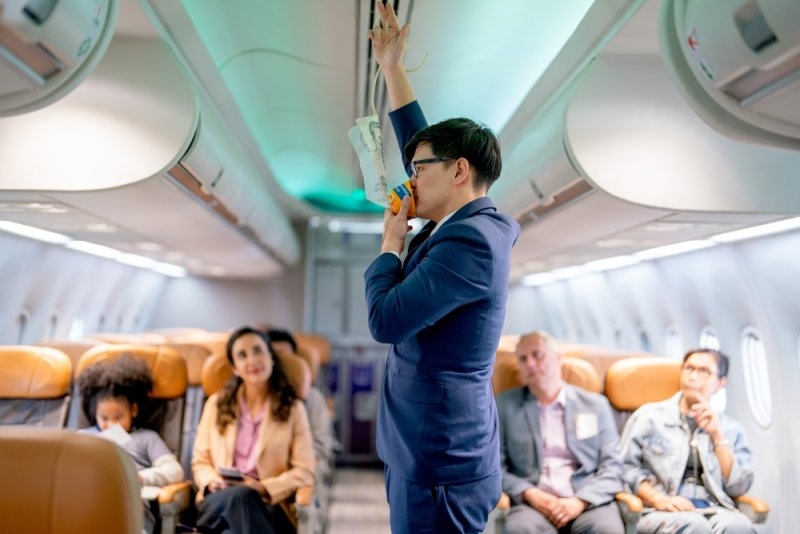
If oxygen masks deploy, pull the mask toward you to start the flow as instructed, place it over your nose and mouth, and secure it. Help yourself first before assisting a child or another passenger.
This point appears repeatedly in airplane safety instructions for a reason. A passenger who becomes incapacitated cannot help someone else.
During an evacuation, leave belongings behind unless crew members specifically direct otherwise. Bags slow people down and can damage evacuation equipment.
Move quickly but do not push others. Follow illuminated paths and crew directions. These are core flight safety procedures, not suggestions.
Good airplane safety does not require anxiety. It requires awareness.
A few habits are worth repeating every trip:
| Situation | Better Passenger Habit |
|---|---|
| Before takeoff | Review the safety card and locate exits |
| During cruise | Keep your belt fastened while seated |
| During turbulence | Sit down and secure loose items |
| During an emergency | Follow crew instructions immediately |
| During evacuation | Leave baggage behind |
The point is not to expect something to go wrong. It is to remove hesitation if something does.
Follow crew and airline requirements for electronic devices. Depending on the aircraft and phase of flight, passengers may be asked to use airplane mode, stow larger devices, or stop using equipment.
These rules support airline safety and help keep cabin operations predictable. Follow the specific instructions given on your flight.
If you notice smoke, a suspicious odor, damaged equipment, a spill, or another potential hazard, tell a flight attendant. Do not assume someone else has already reported it.
Crew members cannot respond to something they do not know about. Early reporting supports aircraft safety.
The most useful airplane safety tips are not complicated. Know your exits. Wear your seat belt. Listen to the crew. Keep aisles clear. Stay calm when something unexpected happens.
Airplane safety also means resisting the urge to copy what other passengers are doing during an emergency. Someone else may be confused. Follow the trained crew instead.
Flight attendants receive extensive emergency training, while commercial aviation operates within detailed safety requirements. Passengers do not need to understand every technical rule behind airline safety.
They need to cooperate with it. That distinction matters.
Also Read: Airport Security Wait Times: Quick Tips for Faster TSA Line
You don’t have to become an aviation nerd to fly safer. You just need enough awareness to spot your exits, keep your seat belt tight, pay attention to announcements, and actually do what the crew asks. The safest passenger isn’t the one who worries the most — it’s the one who’s ready if something odd happens.
Focus during the safety demo, follow procedures, and keep your stuff secured. If the seat belt sign’s on, stay put. These are small actions, but they add up and help everyone stay safe. In the end, practical airplane safety is simple: know the basics, pay attention to the crew, and don’t take unnecessary risks.
Yes, you can, but each airline handles them a bit differently. Approved models and paperwork requirements vary. Always check with your airline before your trip and fill out any forms they ask for.
Not always. Emotional support animals aren’t covered by the same rules as service animals. Most U.S. airlines don’t recognize them as service animals anymore, so you’ll need to look up your airline’s policy before you fly.
Don’t panic—just talk to your airline, use their app, or head to a self-service kiosk to get another copy. You’ll still need your ID to get through security.
Usually you can move around, but only when the crew says it’s okay. Don’t block the aisle, and if they ask you to sit tight, just wait until they say you can get up.
Let a flight attendant know right away. Don’t wait to see if things get worse. The crew is trained for these situations and can help or connect you with more help if needed.
This content was created by AI