

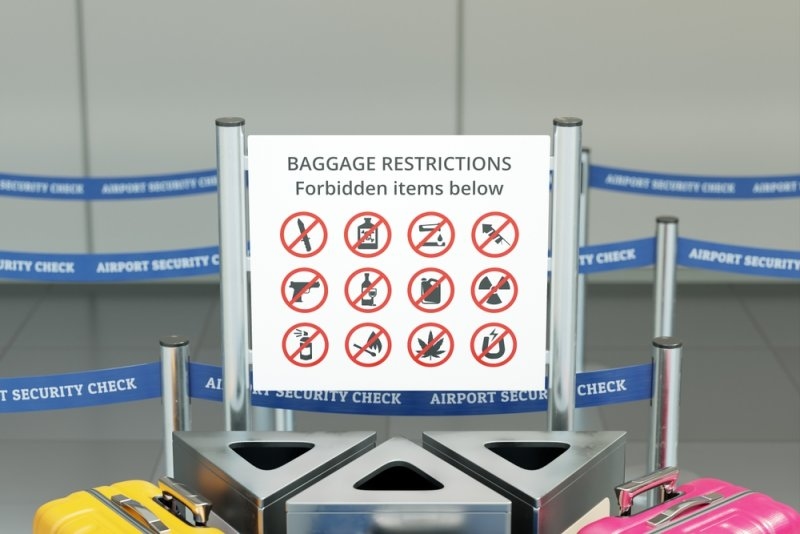
Air travel gets tricky fast when a small item triggers a slowdown at security. One pocket tool, an oversized bottle of shampoo, a spare battery, or some random sporting gear can really mess up your day or even get left behind. It’s also important to remember the TSA has different rules for carry-ons and checked bags. Simply asking if something’s “allowed” isn’t enough.
The smart move is to figure out exactly where the item belongs, how it needs to be packed, and whether your airline adds any extra restrictions. This blog walks you through the most common TSA-prohibited items, where travelers usually trip up, and the packing details you really need to know before you head out.
The easiest way to avoid trouble is to separate completely prohibited items from things that are restricted to one type of baggage.
The TSA prohibited items list covers objects that cannot pass through the passenger screening checkpoint. Many are obvious, but a few everyday-looking objects cause confusion.
Common examples include:
A kitchen knife packed casually into a backpack is still a problem. So is a novelty item that looks like an explosive. TSA-prohibited items are not determined by whether the traveler considers the object harmless.
The TSA prohibited items list should be checked item by item because some objects can travel in checked baggage under specific conditions rather than being completely forbidden. Firearms, for example, cannot go through the passenger checkpoint and must meet strict checked-baggage requirements.
TSA carry-on restrictions often involve quantity, size, construction, or how an item is packed. Liquids are the classic example. For most carry-on liquids, gels, and aerosols, containers must be 3.4 ounces or less and fit into one clear, quart-size bag. Larger quantities may sometimes be allowed when a specific exception applies.
TSA carry-on restrictions also apply to many sharp objects, tools, sporting equipment and other items that could create a security concern. A simple example: a full-size bottle of shampoo may be perfectly legal in checked baggage but fail the carry-on screening rule.
Don't Miss: Simple Airplane Safety Tips Every Traveler Should Know Today
Knowing what you can bring on a plane is mostly about separating ordinary travel items from restricted ones before your suitcase reaches the checkpoint.
Most normal clothing, books, phones, laptops, tablets and personal electronics can travel in a carry-on. Food is also often permitted, although liquid or gel foods can fall under liquid restrictions.
A useful packing test is simple: if the item could leak, spill, cut, ignite, or create a security concern, check the exact rule instead of assuming.
What can you bring on a plane also depends on the item itself. A small pair of scissors may have different treatment from a large blade. A medical item may have an exception that does not apply to ordinary personal products.
Not every item that fails carry-on screening is completely banned from air travel. This distinction saves space, time, and sometimes money.
| Item | Carry-On | Checked Bag |
|---|---|---|
| Firearm | No | Allowed only under strict conditions |
| Fireworks | No | No |
| Large liquid container | Usually no | Often allowed if otherwise permitted |
| Laptop | Yes | Generally allowed, with airline considerations |
| Ammunition | No | Restricted conditions apply |
| Knife | Generally no | Some types may be permitted |
| Flammable fuel | No | Generally no |
This is why “items not allowed on airplanes” is an imperfect phrase. Some items are not allowed through the checkpoint, while others are prohibited in both baggage types.
Fireworks, for example, are not permitted in either carry-on or checked baggage.
The same object can have completely different rules depending on where it is packed. That is one of the biggest reasons travelers make mistakes.
Airport security prohibited items should be reviewed before you close the suitcase, not while standing at the checkpoint.
For example, firearms cannot be carried through passenger screening. If transported legally, they must be unloaded, secured in a locked hard-sided case, and declared to the airline.
Other items may simply need to move from your carry-on to checked baggage. That does not mean every restricted object becomes acceptable in checked luggage.
Airport security prohibited items can also include realistic replicas and hazardous materials. If something resembles an explosive or contains dangerous material, do not rely on common sense alone.
The TSA prohibited items list becomes more useful when applied to real packing situations.
Small packing decisions matter.
Suggested Reading: Essential Luggage Safety Tips For a Stress-Free Air Travel
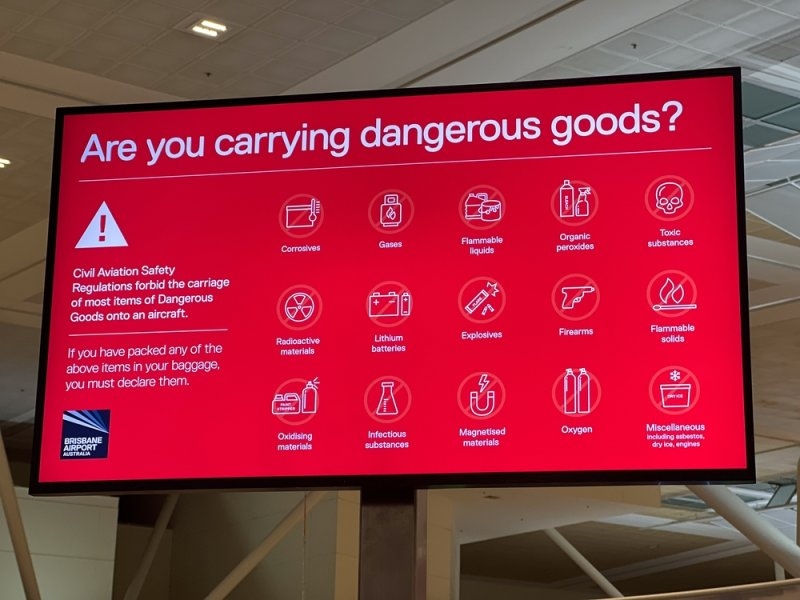
The most troublesome items are not always the dramatic ones. Travelers often overlook ordinary-looking objects because they do not seem dangerous.
Items not allowed on airplanes can include certain tools, blades, explosive materials, flammable substances, and defensive sprays. Some sporting equipment also needs special handling.
Before leaving home, empty every pocket of your backpack. Check old luggage too. A multitool left from a previous road trip can suddenly become a checkpoint issue.
TSA-prohibited items should be considered separately from airline baggage limits. An airline may also impose size, weight, or carriage conditions even when TSA allows the item through screening.
Airport security prohibited items are sometimes subject to specific exceptions for medical, disability-related, or other legitimate travel needs. Documentation or additional screening may apply.
Do not assume an exception automatically applies to every similar product.
When an item has a special purpose, check its exact TSA treatment before packing. What can you bring on a plane can change depending on the product, quantity, and packaging.
A two-minute review can prevent an unnecessary unpacking session at the airport.
Use this quick sequence:
Keep the rules for carry-on and checked luggage separate in your mind. They are not interchangeable. The TSA travel checklist also recommends starting with an empty bag, packing in layers and keeping liquids accessible for screening.
Also Read: What Is Digital Safety and How It Protects Solo Travelers
Packing for a flight shouldn’t feel like a gamble at the security line. There are clear rules for liquids, sharp objects, hazardous materials, and what goes where—so run through that checklist before you zip up your suitcase. The biggest mistake people make is assuming the rules for carry-ons are the same as for checked bags.
They’re not. Use the TSA’s list for your exact item, check how you need to pack it, and double-check your airline’s rules if it’s something odd or unusual. Spending five minutes on this at home beats having to repack in front of everyone at security.
Definitely. Your checked bag may be opened anytime by the TSA for inspection. If so, there should be signage somewhere inside indicating that they are gone.
Not every bag gets the same treatment. Your carry-on goes through some basic screening, but if anything seems off, officers might open it up and check by hand.
Wrapped gifts aren’t the best idea. If security needs to look inside, they’ll have to unwrap them. It’s easier to pack gifts unwrapped and wrap them when you arrive.
Yes, you can bring an empty water bottle, usually with no problem. Once you’re through security, just fill it up at a fountain or refill station—if the airport has one.
Federal TSA rules are the same everywhere, but individual airports, airlines, or destinations might have extra requirements or special procedures. Always check what applies at your departure and arrival points.
This content was created by AI