


Picture this: you finally decide on a destination, open Google Flights, and within seconds, you are staring at two very different prices. One is for a round-trip ticket. The other is a one-way flight ticket. The gap between them makes no sense at first glance, and now you are second-guessing yourself before you have even packed a bag. Sounds familiar? Here is the thing: airlines do not price tickets based on distance. They price them based on traveler behavior. A family booking summer vacation three months early gets treated very differently from a solo traveler buying last-minute. Understanding that one fact makes the entire round-trip vs. one-way air ticket decision much easier to navigate.
A round-trip ticket covers both your outbound and return flights under one reservation. Airlines reward that commitment with lower fares, especially on international routes.
A one-way flight ticket takes you from Point A to Point B with nothing else attached. That flexibility has real value in the right situation, but it usually carries a price premium baked into the fare.
Worth knowing: there is also the open-jaw ticket. You fly into one city and depart from another entirely, say land in Dallas and fly home from Houston after a road trip. It often costs less than two separate one-way flight tickets and cuts out the backtracking.
On domestic US routes, the gap has grown noticeably. A study across five major US routes found round-trip tickets averaged $291, compared to $432 for two one-way flight tickets on the same routes. That is $141 less, or roughly 33% in savings, for choosing a round trip.
That shift has deepened in 2025 and into 2026. Thrifty Traveler analyzed 2,000 domestic flights across five major US carriers and found that more than half of one-way flights carried a price penalty compared to the equivalent round-trip fare. On some American Airlines routes, a one-way main cabin seat runs nearly double the per-leg cost of a round-trip booking. Delta follows a similar pattern, particularly as the travel date gets closer.
On international routes, the difference is sharper. Two separate one-way tickets on long-haul routes can cost anywhere from 30 to 70% more than a single round-trip booking. On popular routes like Washington DC to Frankfurt, current 2026 data shows one-way fares running several hundred to over a thousand dollars more than the equivalent round trip, depending on the airline and travel dates. Airlines reserve their deepest fare discounts exclusively for round-trip bookings, and those rates simply do not appear on one-way searches.
Timing tip: Wednesday departures average 43% cheaper on round trips versus two one-ways. Tuesdays come in close at around 42%.
Don’t Miss: Affordable Flights: Smart Tips for Budget Travelers
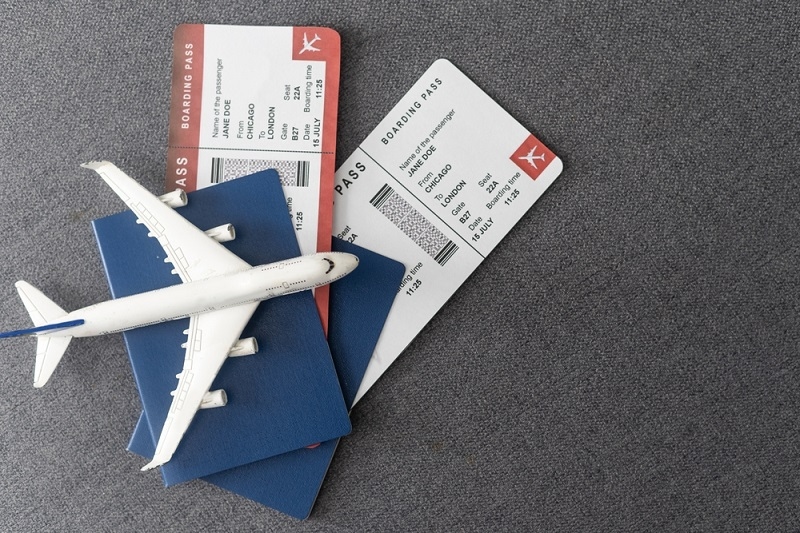
Knowing the benefits of one-way flights versus round-trip tickets helps you pick the right ticket before you spend a dollar. The table below breaks down exactly where each option wins.
| Feature | One-Way Flight Tickets | Round Trip Tickets |
| Flexibility | Change or cancel one leg without affecting the other | Changing one leg can reprice the entire booking |
| Best for dates | Open-ended or unknown return date | Fixed, confirmed travel dates |
| Award/miles value | Pay per segment, often half the miles of a round trip | Some programs offer round-trip discounts (e.g., Delta SkyMiles) |
| Multi-city travel | Fly into one city, depart from another with ease | Locked into the same origin and destination |
| Airline choice | Mix and match carriers for better deals or routes | Tied to one airline for both legs |
| Visa/immigration | May need separate proof of onward travel | Return leg automatically serves as proof |
| Upfront cost | Can appear cheaper, but add-on fees may close the gap | Usually lower total cost, especially internationally |
| Booking simplicity | Two separate reservations to manage | One reservation, one confirmation |
| Best traveler type | Nomads, relocators, multi-city explorers | Vacationers, business travelers, international flyers |
Many countries require proof of a return or onward flight when you arrive. Airlines check this at the gate, not just at immigration. Schengen zone countries, for example, specifically require documentation showing your planned exit from the region before your permitted stay ends. If you hold only a one-way flight ticket and cannot show departure plans, the airline can deny boarding before you leave the US.
Round-trip tickets handle this automatically. If you prefer one-way travel, your options are a fully refundable return ticket you cancel after clearing customs, or a legitimate onward ticket service that generates a real reservation with a verifiable PNR code. These typically cost between $10 and $30 and are widely used by frequent travelers. Always check your specific destination's entry rules before purchasing anything.
Check this out: Ultimate International Travel Checklist for a Smooth Trip
Budget carrier one-way flight tickets often look cheap until baggage fees and seat selection close the gap with a round-trip ticket entirely. Always calculate the total before deciding.
Changing one leg of a round-trip booking can trigger a full repricing of the entire reservation at current fares. That surprise cost catches many travelers off guard.
Skipping the comparison is the most expensive habit in air travel. Always search both round-trip and one-way options before committing. The cheaper choice is not always the one you assume it will be.
There is no single right answer in the round-trip vs. one-way air ticket debate. Fixed dates and international travel almost always favor round-trip tickets. Open-ended plans, award bookings, and multi-city trips often favor one-way flight tickets. Before your next booking, search both options and compare the full cost, including fees. That one habit can save you anywhere from a hundred to several hundred dollars per trip.
Planning a trip and want expert help finding the best fares? Leisure.com connects travelers with curated flight deals, vacation packages, and smart booking tools that take the guesswork out of travel planning. Visit Leisure.com before your next search and see how much further your travel budget can go.
Not necessarily. Budget carriers like Frontier price both options almost identically on many routes. Also, if you find a flash sale on a one-way, that single fare can beat any round-trip deal available that day. Route competition matters more than the ticket type itself.
Mixing airlines on two one-ways saves money but carries real risk. If your first flight is delayed, the second airline owes you nothing since the bookings are unlinked. Leave at least three hours between connections when mixing carriers, and always use a credit card with trip delay protection as a backup.
Beyond cost per segment, booking one-ways separately lets you grab a better seat if availability opens up closer to departure. You can cancel just one leg and rebook without touching the other. Programs like Air France Flying Blue and Alaska Mileage Plan price one-way awards particularly well on transatlantic routes.
This content was created by AI